
What Is a Travel Lead? (2026 Definitive Guide for Travel Agents)
Learn what a travel lead is, why they're valuable, how to qualify them, and proven strategies for converting travel inquiries into booked trips. Complete guide with real examples and conversion benchmarks.
What Is a Travel Lead? (2026 Definitive Guide for Travel Agents)
A travel lead is a potential traveler who has expressed interest in booking a trip but hasn't booked yet, typically sharing details like destination, dates, budget, number of travelers, and trip type.
Travel leads represent high-intent prospects and are one of the most valuable opportunities for travel agents.
Understanding what makes a travel lead, how to qualify them, and how to convert them effectively can dramatically increase your bookings and revenue.
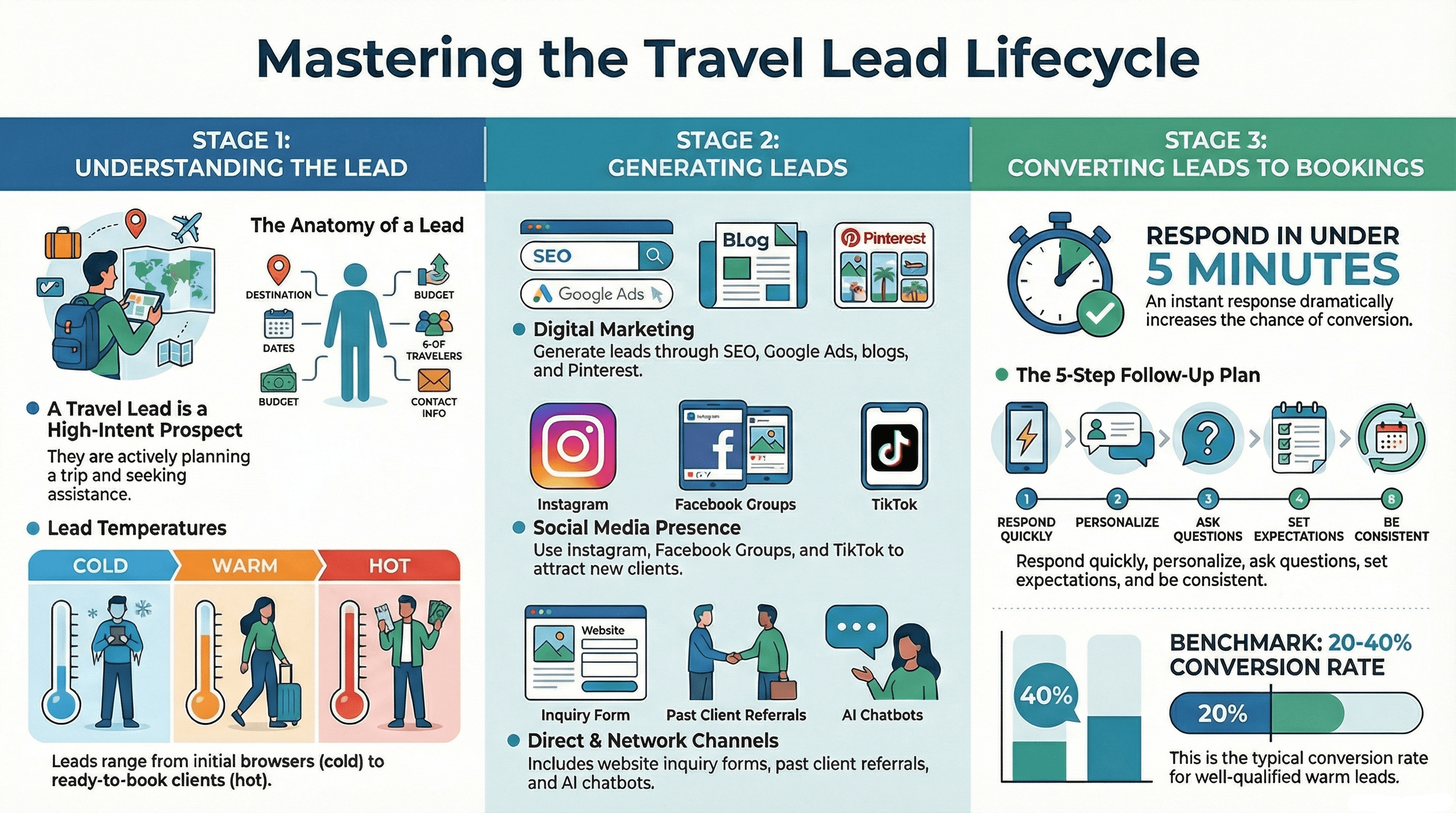
This infographic illustrates the complete travel lead lifecycle, from understanding what makes a lead to generating new inquiries and converting them into bookings.
Travel Lead Definition
A travel lead is someone actively planning a trip and willing to provide details about their travel plans. Unlike cold browsers, these individuals have a clear travel goal and are open to assistance from a travel professional.
The key distinction: travel leads have moved beyond just "thinking about traveling" — they're actively seeking information, comparing options, or ready to make a decision.
Information Included in a Travel Lead
Travel leads typically include:
- Name & contact information (email, phone)
- Destination (specific location or region)
- Travel dates or date range (exact dates or flexible windows)
- Number of travelers (adults, children, group size)
- Budget (total trip budget or per-person budget)
- Trip type (Disney, all-inclusive, cruise, Europe, honeymoon, etc.)
- Special requirements (rooms, dining, accessibility, preferences)
- Requested services (hotel, resort, flights, tours, transportation)
The more complete the information, the higher the quality of the lead and the better your chances of conversion.
Why Travel Leads Are Important for Travel Agents
Travel leads are valuable because:
- They're already considering a purchase — not just browsing
- They tend to convert faster than cold traffic
- They often book within a defined window — creating urgency
- They're actively seeking guidance or pricing — ready to engage
- They're easier to nurture through follow-up
High-quality travel leads drive revenue, repeat business, and referrals. They represent the bridge between marketing efforts and actual bookings.
Real Examples of Travel Leads
Understanding what travel leads look like in practice helps you recognize and prioritize them effectively.
Example 1 — Disney Lead
"Family of 4 looking for a 5-night Disney World trip in October. Resort, park tickets, and dining plan included."
Why this is a strong lead:
- Specific destination (Disney World)
- Clear dates (October)
- Defined group size (family of 4)
- Specific requirements (resort, tickets, dining)
- Ready to book timeline
Example 2 — All-Inclusive Lead
"Couple seeking a 7-night Cancun all-inclusive under $4,000 in May."
Why this is a strong lead:
- Specific destination (Cancun)
- Clear budget ($4,000)
- Defined dates (May)
- Trip type specified (all-inclusive)
- Budget-conscious but realistic
Example 3 — Cruise Lead
"Group of 6 looking for a Spring Break Royal Caribbean cruise. Two balcony cabins + one interior."
Why this is a strong lead:
- Specific cruise line preference
- Clear group size and room requirements
- Timeframe (Spring Break)
- Specific accommodation needs
Example 4 — Europe Trip Lead
"Honeymoon couple planning a 10-day Italy itinerary in September with flights + hotels."
Why this is a strong lead:
- Specific destination (Italy)
- Trip type (honeymoon)
- Duration defined (10 days)
- Services needed (flights + hotels)
- Travel window (September)
How Travel Leads Are Generated (2026)
Understanding how travel leads are generated helps you optimize your lead generation strategy and focus on the highest-converting sources.
As shown in the infographic above, lead generation happens through multiple channels including digital marketing, social media, referrals, and automation tools. The most successful agents use a combination of these methods to create a steady stream of qualified inquiries.
1. Digital Marketing
SEO (Search Engine Optimization)
- Ranking for destination-specific keywords
- Blog content about travel planning
- Local SEO for travel agents
Google Ads
- Targeted campaigns for high-intent searches
- Destination-specific ad groups
- Retargeting campaigns
Blogs
- Destination guides
- Travel planning tips
- Trip type deep-dives
- Visual destination inspiration
- Trip planning boards
- Travel agent profiles
Local search visibility
- Google Business Profile optimization
- Local directory listings
- Community engagement
2. Social Media
- Destination photos and reels
- Client testimonials
- Behind-the-scenes content
- Instagram Stories with trip highlights
Facebook groups
- Travel planning communities
- Destination-specific groups
- Local business networks
TikTok
- Quick travel tips
- Destination spotlights
- Booking process demos
YouTube
- Detailed destination guides
- Trip planning tutorials
- Client success stories
Live videos & destination spotlights
- Real-time Q&A sessions
- Virtual destination tours
- Trip planning workshops
3. Referrals & Networking
Past clients
- Satisfied customers referring friends and family
- Repeat bookings from previous clients
- Word-of-mouth recommendations
Community events
- Local travel shows
- Networking events
- Community partnerships
Local business partnerships
- Wedding planners
- Event coordinators
- Corporate contacts
4. Travel Lead Providers
Marketplaces
- Online travel agent marketplaces
- Lead generation platforms
- Travel inquiry networks
Tour operator programs
- Preferred partner programs
- Co-op marketing opportunities
- Supplier referral programs
Travel networks
- Host agency networks
- Travel consortiums
- Industry associations
5. Website Inquiry Forms
Quote request forms
- Simple, focused forms
- Quick qualification questions
- Instant confirmation
"Plan my trip" question sets
- Comprehensive trip planning forms
- Detailed preference collection
- Automated follow-up sequences
Lead magnets
- Free destination guides
- Trip planning checklists
- Budget calculators
6. AI & Automation Tools
Chat widgets
- Website chatbots
- Instant response systems
- 24/7 lead capture
Auto-response systems
- Email automation
- SMS follow-ups
- Multi-channel nurturing
CRM lead capture
- Integrated form submissions
- Social media inquiry capture
- Email signature links
Messenger/DM automations
- Facebook Messenger bots
- Instagram DM automation
- WhatsApp business tools
Types of Travel Leads
Understanding the different types of travel leads helps you prioritize your efforts and tailor your approach.
Cold Travel Leads
Characteristics:
- Minimal information provided
- Exploratory phase
- Still browsing and researching
- May not have specific dates or budget
Approach:
- Focus on education and relationship building
- Provide valuable information
- Don't push for immediate booking
- Nurture over time
Warm Travel Leads
Characteristics:
- Provides trip details
- Asking specific questions
- Ready to compare options
- Has a timeline in mind
Approach:
- Respond quickly with personalized information
- Provide comparison options
- Set clear expectations
- Follow up consistently
Hot Travel Leads
Characteristics:
- Full details provided
- Ready to book
- Needs pricing confirmation
- Decision timeline is immediate
Approach:
- Prioritize immediate response
- Provide pricing quickly
- Make booking process easy
- Follow up within hours, not days
How Travel Agents Qualify a Lead
Qualifying leads helps you focus your time on the most likely-to-book opportunities and provides better service to clients who are ready to move forward.
Key Questions to Ask
-
What destination are you considering?
- Specific location or region
- Multiple destinations under consideration
- Flexibility on destination
-
What dates or timeframe?
- Exact dates
- Flexible date range
- Season preference
- Must-travel-by date
-
How many travelers?
- Adults and children
- Room requirements
- Group dynamics
-
What's your approximate budget?
- Total trip budget
- Per-person budget
- Budget flexibility
- What's included in budget
-
What kind of experience do you want?
- Relaxation vs. adventure
- All-inclusive vs. à la carte
- Luxury vs. value
- Specific activities or interests
-
When do you plan to make a decision?
- Immediate timeline
- Planning window
- Booking deadline
- Decision factors
Leads with clear, ready-to-act answers are high-quality opportunities.
Travel Lead Conversion Benchmarks (2026)
Understanding industry benchmarks helps you set realistic expectations and identify areas for improvement.
Response Time
Under 5 minutes yields the highest conversions
Research shows that responding to leads within 5 minutes increases conversion rates by up to 900% compared to responding after 30 minutes. Speed matters more than almost any other factor.
Conversion Range
~20–40% for warm leads
Warm leads (those with specific details and a clear timeline) typically convert at 20-40% when properly managed. Cold leads convert at much lower rates (5-10%), while hot leads can convert at 60%+.
Lead Sources That Convert Best
Referrals, website inquiries, Instagram DMs
- Referrals: 40-50% conversion rate
- Website inquiries: 25-35% conversion rate
- Instagram DMs: 20-30% conversion rate
- Social media ads: 10-20% conversion rate
- Lead providers: 5-15% conversion rate
Follow-Up Window
Up to 90 days for slower-decision travelers
While immediate follow-up is critical, many travel decisions take time. Effective agents continue nurturing leads for up to 90 days, with consistent but non-pushy communication.
How to Respond to a Travel Lead
Your response strategy can make or break a lead. Here's a proven framework for responding effectively.
The infographic above outlines a 5-step follow-up plan that successful agents use: respond quickly, personalize, ask questions, set expectations, and be consistent. Let's break down each step in detail.
Step 1 — Respond Quickly
Instant response = significantly higher conversion.
Set up automated acknowledgments and aim to send a personalized response within 5 minutes. Even a simple "I received your inquiry and will send detailed information within 2 hours" dramatically improves conversion rates.
Step 2 — Personalize
Reference their destination, dates, group size.
Use the information they provided to show you've read their inquiry. Personalization builds trust and demonstrates attention to detail.
Example: "Hi Sarah, I saw you're planning a 7-night Cancun trip for May with your partner. That's a perfect time to visit — the weather is ideal and the crowds are manageable."
Step 3 — Ask Clarifying Questions
Budget, resort category, activity preferences.
Use strategic questions to gather the information you need to provide accurate pricing and recommendations. Frame questions as helpful guidance, not interrogation.
Example questions:
- "What's most important to you — beach time, activities, or relaxation?"
- "Are you looking for a more intimate resort or a larger property with more amenities?"
- "Do you have any dietary restrictions or accessibility needs?"
Step 4 — Set Clear Expectations
Let them know when pricing will be ready.
Set realistic timelines and stick to them. If you say "I'll have pricing by Friday," deliver it by Friday. Reliability builds trust.
Example: "I'll research options that match your preferences and send you a detailed proposal with pricing by Thursday afternoon. I'll include 2-3 options at different price points so you can choose what works best."
Step 5 — Follow Up Consistently
Most agents lose leads due to inconsistent communication.
Create a follow-up schedule and stick to it:
- Day 1: Initial response
- Day 3: Check-in if no response
- Day 7: Re-engagement with new information
- Day 14: Final check-in with alternative options
- Day 30: Long-term nurture (if still interested)
Why Travel Leads Ghost (Common Causes)
Understanding why leads disappear helps you prevent it from happening.
Response Delays
Leads who don't hear back quickly assume you're too busy or not interested. They move on to agents who respond faster.
Information Overload
Sending too much information at once overwhelms leads. Break information into digestible pieces and let them ask for more.
No Follow-Up
Many agents send one message and give up. Consistent, helpful follow-up keeps you top-of-mind when leads are ready to decide.
Pricing Takes Too Long
If pricing takes days or weeks, leads lose interest or find alternatives. Set realistic timelines and deliver on them.
They Booked Elsewhere
Sometimes leads book with competitors who responded faster, provided pricing sooner, or made the process easier.
Lost Interest
Travel plans change, budgets shift, or priorities change. This is normal, but consistent follow-up can re-engage leads when they're ready again.
No Automated Reminders
Without a system to remind you to follow up, leads slip through the cracks. Automation ensures nothing falls through.
How to Track and Manage Travel Leads Effectively
Effective lead management requires tracking the right information and having systems to act on it.
Agents Should Track:
- Lead source — Where did this lead come from?
- Trip details — Destination, dates, travelers, budget
- Status — New, researching, quoted, booked
- Communication history — All interactions in one place
- Follow-up tasks — What needs to happen next
- Next action — Specific next step required
- Likelihood to book — Probability score
Best Practices for Lead Tracking:
- Update status immediately when something changes
- Log all communications — calls, emails, texts, meetings
- Set follow-up reminders for every lead
- Use tags or labels to categorize by trip type, source, or priority
- Review pipeline regularly to identify stuck leads
- Track conversion rates by source to optimize marketing
Why LeadsFollow Is the Best Tool for Managing Travel Leads
LeadsFollow helps travel agents:
- Capture leads automatically — Forms, emails, and inquiries flow directly into your system
- Organize trip inquiries visually — See your entire pipeline at a glance
- Track statuses from inquiry → booked — Clear visibility into where each lead stands
- Store communication logs — All interactions in one place, searchable and organized
- Automate follow-ups — Never let a lead slip through the cracks
- Reduce drop-offs and ghosting — Consistent follow-up keeps you top-of-mind
- Improve response speed — Instant notifications and mobile access
The result: more booked trips with less admin work.
LeadsFollow is built specifically for travel agents, with features designed around the unique workflow of planning trips, managing multiple travelers, and nurturing leads through long sales cycles.
Frequently Asked Questions About Travel Leads
What is a travel lead?
A potential traveler who has expressed interest in booking a trip and provided trip details. Travel leads are people actively planning a trip and seeking assistance from a travel professional.
What is included in a travel lead?
A complete travel lead includes destination, dates, budget, group size, preferences, and contact information. The more information provided, the higher the quality of the lead.
How do travel agents get leads?
Travel agents get leads through SEO, social media, ads, referrals, website forms, and lead providers. The most successful agents use multiple channels and focus on the sources that convert best for their business.
What makes a lead warm?
A warm lead provides specific details, shows readiness to compare pricing, and has a clear travel window. They've moved beyond just thinking about traveling and are actively planning.
What's the best tool to manage travel leads?
LeadsFollow offers automated lead tracking and follow-up specifically designed for travel agents. It helps you capture, organize, and convert travel inquiries into booked trips with less manual work.
How quickly should I respond to a travel lead?
Respond within 5 minutes for the highest conversion rates. Even an automated acknowledgment followed by a personalized response within 2 hours significantly improves conversion compared to waiting days.
What's the difference between a cold, warm, and hot travel lead?
- Cold lead: Minimal information, exploratory phase, still researching
- Warm lead: Specific details provided, asking questions, ready to compare options
- Hot lead: Full details, ready to book, needs pricing confirmation
How long should I follow up with a travel lead?
Continue following up for up to 90 days with consistent, helpful communication. Many travel decisions take time, and leads who don't book immediately may book later if you stay top-of-mind.
Conclusion
A travel lead is one of the most important opportunities for travel agents, and managing them properly can dramatically increase bookings. By understanding what travel leads are, how they behave, and how to follow up effectively, agents can increase conversions and deliver a better client experience.
The key to success is speed, personalization, consistency, and having the right systems in place to never let a lead slip through the cracks.
LeadsFollow gives you the tools to stay organized, respond faster, and close more trips with less effort. With automated lead capture, visual pipeline management, and intelligent follow-up reminders, you can focus on what you do best — planning amazing trips for your clients.
Ready to Stop Losing Leads and Start Converting More Inquiries Into Bookings?
👉 Try LeadsFollow free and see how automated lead management can transform your travel agency.